
Right of Entry to Private Property in Strata Groups
South Australia. This article follows the Strata Titles Act 1988 (SA), the Community Titles Act 1996 (SA) and, where relevant, other South Australian legislation. Every Australian jurisdiction regulates the same ground and every one sets different numbers. Read this for the shape of the obligation and check your own Act before relying on any period, threshold or penalty.
The default position: a unit is private property
Inside the boundaries of a strata or community-titled unit, the unit holder has the same rights against trespass that any private property owner has. The corporation, neighbouring owners, tradespeople, and even the strata manager generally need permission or a legal right to enter.
That said, several scenarios give rise to a legal right of entry, sometimes with notice and sometimes without. Understanding when those rights apply prevents disputes, and helps a corporation act decisively when it needs to.
Strata Title: Implied Easements (Section 9)
Under Section 9 of the Strata Titles Act 1988 (SA), easements are implied in every strata scheme to allow:
Support and shelter between units and common property.
Passage of water, sewerage, gas, electricity, and other services through pipes, cables, and conduits.
Access for maintenance, repair, and renewal of common property and shared services.
An easement is a legal right to cross or otherwise use another person's land for a specified purpose. Section 9 means that if shared services or common property pass through one owner's yard or unit, the other owners and the corporation have a legal right to access them regardless of whether the affected owner agrees.
Worked example: a Magistrates court ruling
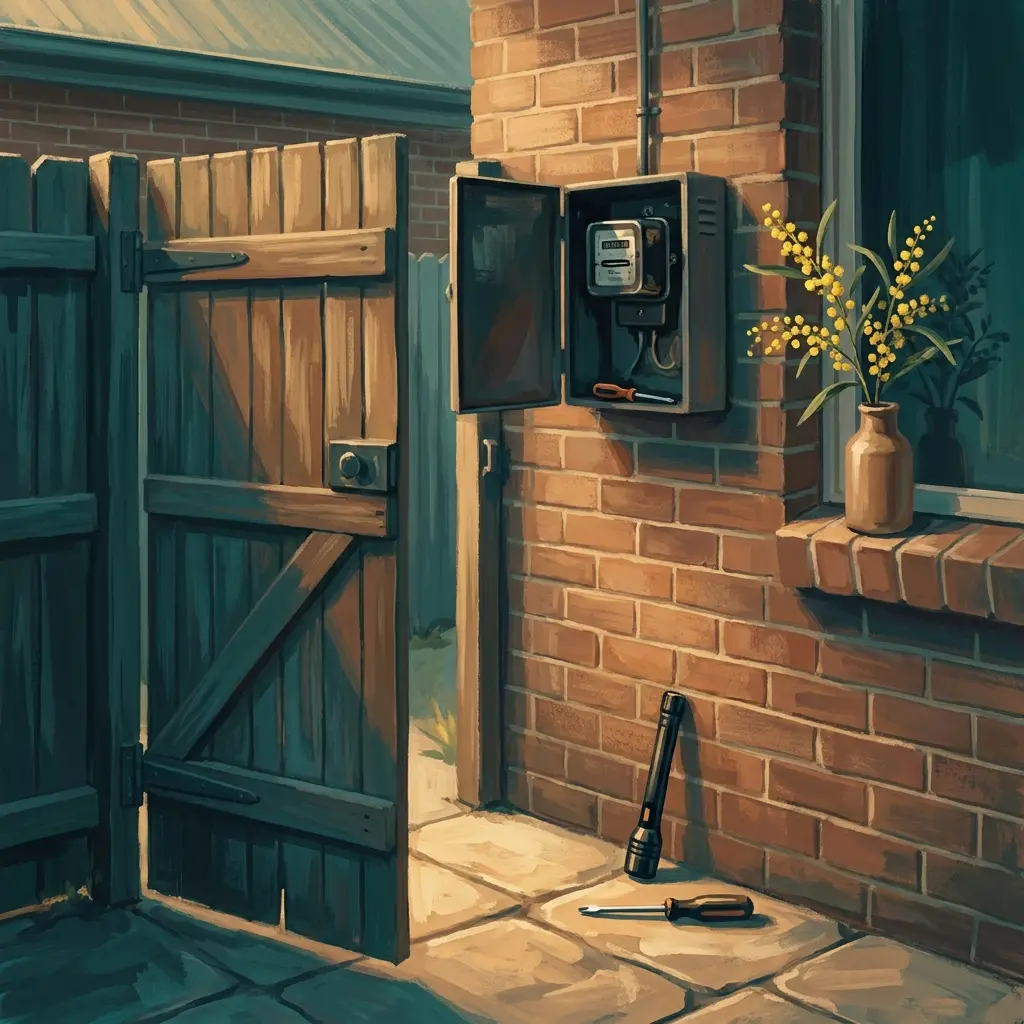
A South Australian Magistrates Court case dealt with a strata group where the common electricity meter box and fuses were located in the yard of one unit (a unit subsidiary). The owner had been refusing access to residents and meter readers.
The Magistrate found that Section 9 provides an easement: residents and owners who needed to access the meters and fuses had a legal right to enter and cross the unit owner's yard. The Court ordered the owner, with at least 48 hours' written notice, to provide access for residents, owners, tradespersons, meter readers, and electricity-service technicians (including for installation of remote-reading meters). The Court also ordered that any costs incurred enforcing the easement, including a police standby or private security, were recoverable from the owner.
The case is a useful reminder that Section 9 is not aspirational. It's enforceable, and the cost of enforcement can be sheeted home to the obstructing party.
Strata Title: Emergency Entry (Section 42)
Section 42 of the Act provides a separate, narrower power: a unit holder's power of entry to another unit when their own unit's services have failed.
The section applies if:
Hot or cold water, gas, electricity, heating oil, or air-conditioned air supply to the unit fails; or
The sewerage, garbage, or drainage system serving the unit fails to operate properly; and
Another unit must be entered to investigate the cause or carry out necessary repairs.
In those circumstances, the affected unit holder (or someone they authorise) may enter the other unit, after giving as much notice as is practicable in the circumstances. Reasonable force may be used but any damage caused must be made good immediately at the entering unit holder's expense.
Worked example: a burst hot water system
A strata manager once used Section 42 to break into a unit where a hot water service had split and was leaking through the ceiling of the unit below. The owner could not be reached. Without the power of entry, the leak would have caused vastly more damage to both units while everyone waited for the owner to surface. The damage from the entry itself was made good at the cost of the unit holder whose system had failed. See also Hot Water Systems for the underlying who-pays question.
Community title: Equivalent Provisions
The Community Titles Act 1996 (SA) contains equivalent provisions. Implied easements for support, shelter, and services apply in community schemes (analogous to Section 9 of the Strata Titles Act). An equivalent emergency power of entry for service failures mirrors Section 42, notice where practicable, reasonable force allowed, damage to be made good immediately at the entering party's expense.
Other common right-of-entry ccenarios
By-law inspections
By-laws cannot, on their own, override the general law of trespass. A by-law that purports to give the corporation a right to enter a unit at will is unlikely to be enforceable. By-laws can validly require an owner to permit access for specific purposes (e.g., annual termite inspections of common-property sections of the unit), but the by-law has to be reasonable and clearly drafted. See By-laws Explained.
Tenants and landlords
A tenant's rights under the Residential Tenancies Act 1995 (SA) are separate from any rights the corporation has. A landlord cannot promise the corporation access in a way that overrides the tenant's quiet-enjoyment rights. In practice, the landlord arranges the access with the tenant under the Tenancies Act, and the corporation works through that channel.
Police and emergency services
Police, fire, and ambulance services have their own statutory powers of entry under various Acts (the Summary Offences Act 1953 (SA), the Fire and Emergency Services Act 2005 (SA), and others). Those powers are independent of the Strata or Community Titles Acts and aren't affected by anything the corporation does or doesn't do.
Practical guidance
Give written notice where you can. Even when Section 9 or 42 doesn't strictly require it, written notice creates a paper trail that protects everyone. Forty-eight hours is a reasonable default; longer if the access is non-urgent.
Document the failure. If you're relying on Section 42, photograph the symptom (the leak, the failed service) and keep a record of attempts to contact the affected unit holder.
Make good immediately. If you have to break a lock or damage a door, fix it that day if at all possible, and pay for the repair. Unreasonable delay or grudging repair costs is what turns these matters into court cases.
Bring in the corporation early. If access has been refused, raise it at a committee meeting and document the position. A formal corporation request to comply puts the matter on a proper footing before any enforcement step.
If access is refused
The route is the Magistrates Court (Civil Division), which has jurisdiction over strata and community-title disputes under Section 41 of the Strata Titles Act and the equivalent provisions of the Community Titles Act. The court can order access, can order costs against the obstructing party (as the meter-access case showed), and in extreme cases can authorise enforcement with police standby.
Mediation through Consumer and Business Services is often a useful first step where the relationship is fixable. See Disputes for the broader pathway.
Get in touch
If your group is dealing with a refused access, or is unsure whether an entry is justified, we're happy to talk through it. Acacia Collective manages strata and community title groups across South Australia.
Call us on 1300 79 2255 or email hello@acaciacollective.com.au.
Have questions about strata?
Get in touch and we'll help with your strata needs.