
Air Conditioners - The Different Types and Who Owns Them
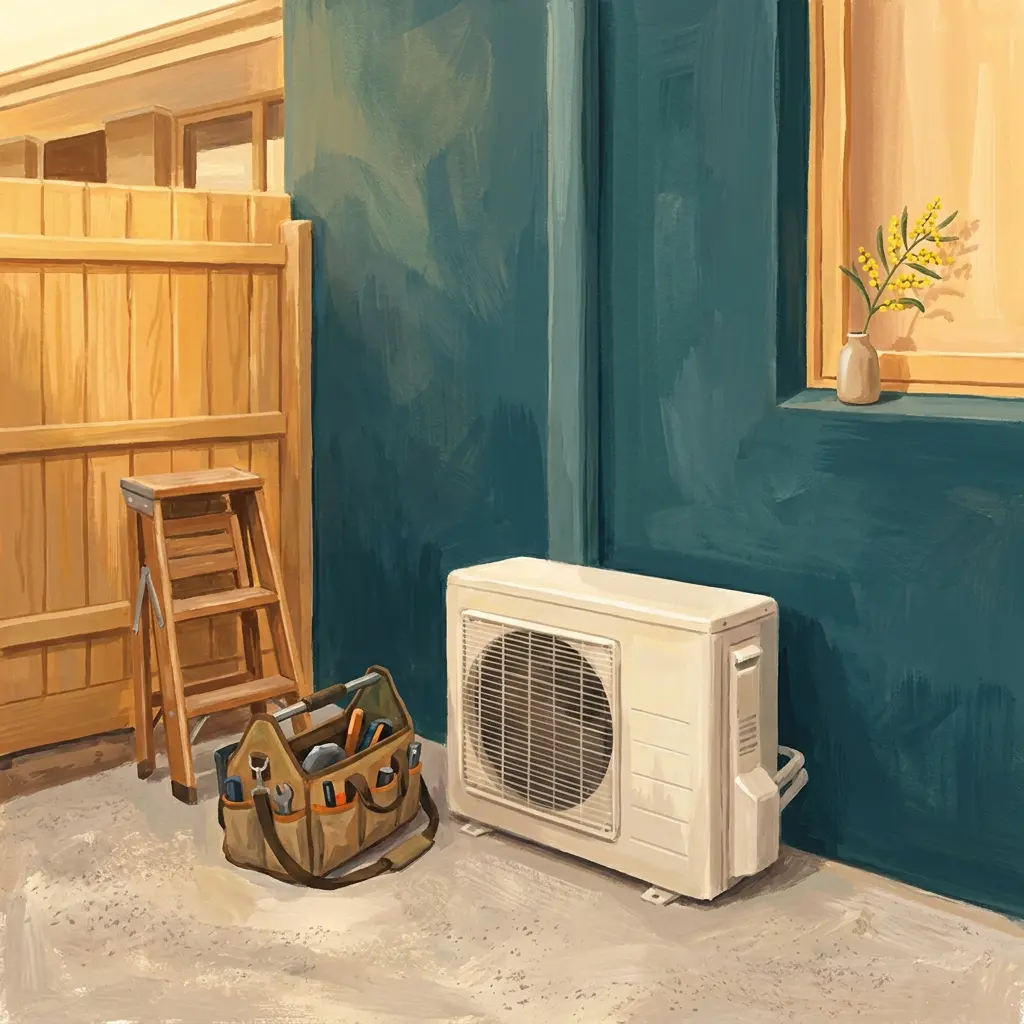
Who owns the air conditioner?
The same shared-versus-individual rule that applies to hot water applies here:
If the air conditioner serves more than one unit, it is common property.
If the air conditioner serves only one unit, it is the owner's.
Where it gets complicated is that the unit may be the owner's, but the installation almost always involves common property, for example an external wall to bracket the unit, a roof for an evaporative cooler, common-property paths or driveways for the compressor or common ducts for cabling. That is where the corporation's rules come into play, and that is where most of the disputes start.
The common property test, by jurisdiction
The rule is the same in substance everywhere: equipment serving more than one lot is common property and the corporation maintains it; equipment serving a single lot is the owner's. The wording and the section number change.
NSW. Strata Schemes Management Act 2015, s 106(1) for the duty, with a s 107 common property memorandum able to shift specified items onto an owner.
VIC. Owners Corporations Act 2006, s 46 for common property and s 47 for services.
QLD. Body Corporate and Community Management Act 1997, s 152, with the duty in your regulation module: Standard Module s 180, Accommodation Module s 170, Commercial Module s 127, Small Schemes Module s 99.
WA. Strata Titles Act 1985, s 91(1)(c).
SA. Strata Titles Act 1988, s 5(6) covers any pipe, cable, wire, duct or drain not for the exclusive use of a unit, and s 25 imposes the duty. The Community Titles Act 1996 is more explicit still: s 3 defines service infrastructure to include air conditioning and ventilation equipment supplying more than one lot, s 28 makes it common property and s 75 requires maintenance.
TAS. Strata Titles Act 1998, Schedule 1 clause 8.
ACT. Unit Titles (Management) Act 2011, s 24(1).
NT. Unit Titles Act 1975, s 34(b).
The four main system types
Wall or window units
At the smallest end of the air conditioning market sit self-contained units installed in a window or external wall, suitable for a single room or open-plan area up to roughly 50 m². Smaller models plug into a normal power point; larger ones may need additional wiring. Where the unit hangs from a window or sits in an external wall, the installation involves common property even though the air conditioner itself only serves one unit.
Split systems
Split systems are the most common style installed in strata today. A compressor (the noisy outdoor box) is installed externally, and has one or more indoor air outlets connected by refrigerant pipe and electrical cabling running through the wall. The compressor is almost always mounted on common property, an external wall, a balcony, or a path, which means corporation approval is needed to install.
Ducted systems
Ducted systems provide whole-of-unit cooling through ceiling-space ductwork connected to a large external compressor or roof-mounted unit. In a strata building they're most likely seen in townhouse-style groups or in retrofits where the ceiling void is large enough. Installation almost always involves significant common property, in roof penetrations, structural fixings and ceiling voids, and requires careful corporation approval.
Evaporative coolers
These are best suited to dry inland climates. Hot air is drawn over a water reservoir and the cooled, moistened air is blown into the unit. They're cheap to run but require a water supply and good drainage, and therefore do not perform in coastal humidity. Roof-mounted evaporative coolers raise the same common-property approval questions as a ducted compressor.
Modern systems often add inverter technology, which is a variable-speed compressor that uses less power than a conventional on-off compressor. Most split systems sold today are reverse-cycle, meaning they heat as well as cool. Reverse-cycle running costs are typically cheaper than electric resistance heating, which is why many groups now favour them over older heater installations.
Approval: special resolution vs unanimous resolution
This is the part that catches owners out. Installing an air conditioner often requires the corporation's approval and the threshold depends on what is being approved.
Two different decisions are in play, and they carry different thresholds. Approving the installation itself, where it touches common property, is the lower bar. Granting the owner exclusive use of an area of common property, for example the slab the compressor sits on, is the higher one. Every Australian jurisdiction draws that distinction, because exclusive use permanently removes something from the shared pool, and no parliament has been willing to let a simple majority do that.
The numbers themselves are set by your own Act. In South Australia, for example, approving an installation that affects common property typically calls for a special resolution, requiring at least 14 days' written notice setting out the terms, and passing only if the votes against are 25% or less of the total votes that could be cast. Granting exclusive use goes further and requires a unanimous resolution, which is a special resolution with no dissenting vote at all.
Elsewhere the labels and the percentages differ, and some jurisdictions use a by-law rather than a resolution to confer exclusive use. Check the resolution thresholds in your own Act before you set an agenda, because getting the threshold wrong is one of the few procedural errors that can invalidate the decision after the fact.
If your group is fielding a lot of air conditioner requests, the practical answer is to set a policy once and apply it consistently. See the sample below.
Common installation problems
Compressor on a path or driveway. These can be a trip hazard at night and vulnerable to vehicle damage. Bollards or relocation usually fix it.
Improvised drain plumbing. An old garden hose dribbling condensate down a wall is the giveaway. Have it plumbed properly into existing pipework.
Window-hung units sagging from the frame. These are often installed without brackets or load support. Both are unsafe and a sign that the install was never approved.
Compressor noise. Most modern split systems run well under 45 dB at 1 metre (about the sound of a quiet library), but older units, poorly mounted units or units running 24/7 can create real friction with neighbours. Mounting quality and placement often matter more than the spec sheet rating.
Maintenance tips
For evaporative coolers specifically:
Cover the unit during winter to extend equipment life and reduce drafts.
Replace water and clean the pads before each summer. Sediment, fungus and algae build up over time and reduce both efficiency and air quality.
Disinfect every six months for groups in continuous use.
After summer: disconnect power, clean the basin and waterways, dry the internal parts by running the fan, and refit waterproof covers.
For split systems, an annual professional clean of the indoor unit and a check of the gas charge will catch most faults before they leave the unit running but not cooling.
A sample air conditioner policy
The following is a starting point your corporation can adapt. Both Acts allow your group to set this kind of standing rule by special resolution.
Approval requirement (special resolution): Unit holders may install a wall-mounted or split-system air conditioner, provided the unit is not mounted on the frontage of the unit or impeding any common walkway, is a low-noise rotary compressor model creating no more than 45 dB at 1 metre, and complies with EPA requirements current at the time of installation.
Or: Unit holders may install a roof-mounted air conditioner, provided it is mounted below the ridgeline at the rear of the building, is similar in colour to the roof, creates no more than 45 dB, and complies with EPA requirements current at the time of installation.
For community-title groups arranged lot beside lot, refer to your by-laws first. If the by-laws are silent on air conditioners or building appearance, owners can usually proceed without approval as the Community Titles Act gives lot owners more autonomy than strata gives unit holders.
Get in touch
If you're working through an air conditioner approval, drafting a policy, or fielding a noise complaint, we're happy to help. Acacia Collective manages strata and community title groups across South Australia.
Call us on 1300 79 2255 or email hello@acaciacollective.com.au.
Related Articles


Have questions about strata?
Get in touch and we'll help with your strata needs.