
Hot Water Systems - Ownership and Common Configurations
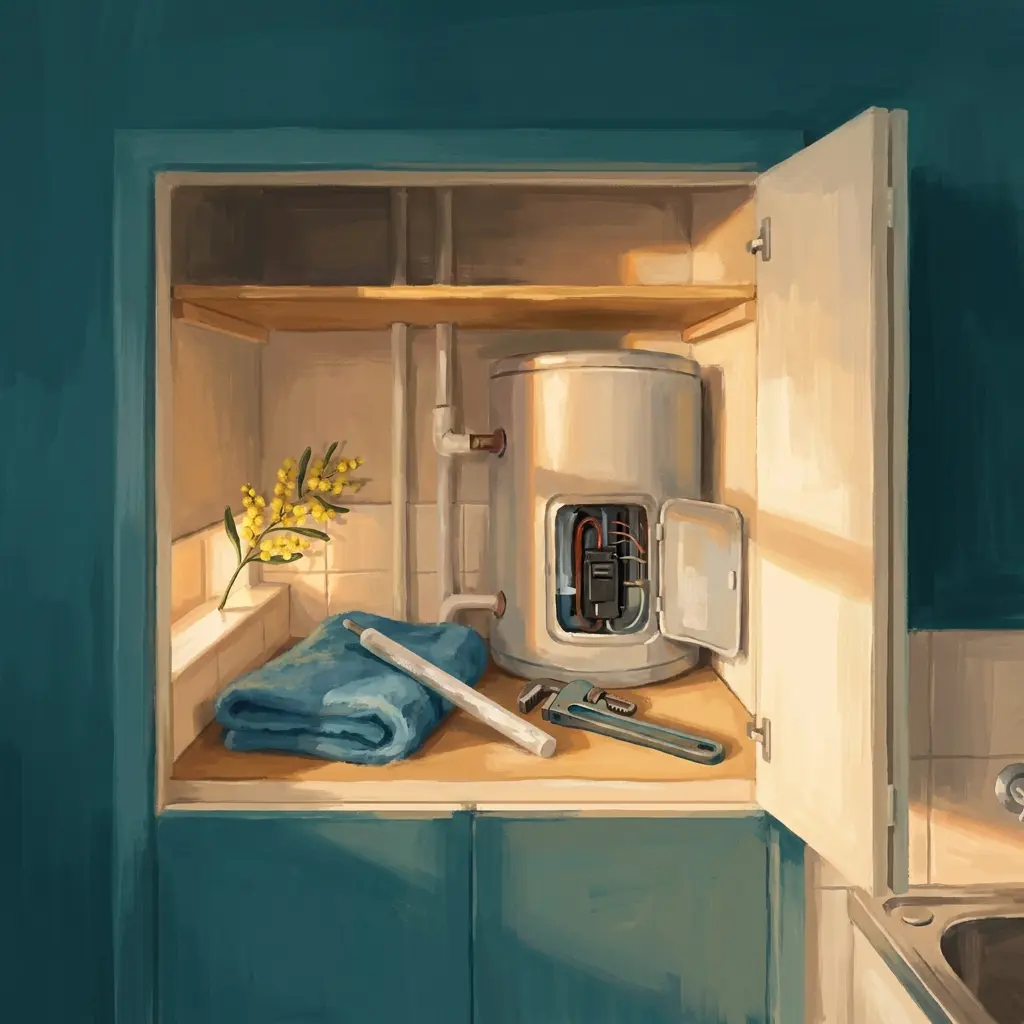
Who owns the hot water service?
The rule is simpler than most owners expect, and it turns on a single question: does the service supply more than one unit?
If the hot water service supplies two or more units, it is common property, owned and maintained by the corporation. If the hot water service supplies only one unit, it is the owner's to maintain. This applies regardless of where the unit physically sits or where the heater is mounted. The line is drawn by who the heater serves, not by where it lives.
The service infrastructure test, by jurisdiction
Every Australian jurisdiction draws the line the same way in substance: infrastructure that serves more than one lot is common property and the corporation maintains it, while infrastructure serving a single lot exclusively belongs to that owner. So a shared gas-fired storage system is the corporation's, and the individual electric tank inside one lot is the owner's. What changes is the wording and the section number.
NSW. Strata Schemes Management Act 2015, s 106(1) for the duty. Utility infrastructure serving more than one lot is common property under the Strata Schemes Development Act 2015; a s 107 common property memorandum can move responsibility for specified items.
VIC. Owners Corporations Act 2006, s 46 for common property and s 47 specifically for services. Lot owners must not repair or alter common property themselves (s 47A).
QLD. Body Corporate and Community Management Act 1997, s 152, with the operative duty in your regulation module: Standard Module s 180, Accommodation Module s 170, Commercial Module s 127, Small Schemes Module s 99. The modules also define utility infrastructure, so check yours.
WA. Strata Titles Act 1985, s 91(1)(c), covering deterioration from fair wear and tear, inherent defect or any other cause.
SA. Strata Titles Act 1988, s 5(6) puts any pipe, cable, wire, duct or drain not for the exclusive use of a single unit in common property, and s 25 imposes the duty. Under the Community Titles Act 1996, s 3 defines service infrastructure to include the cables, pipes, plant and equipment supplying water, gas and electricity to lots except where they supply only a single lot, s 28 makes it common property and s 75 requires maintenance.
TAS. Strata Titles Act 1998, Schedule 1 clause 8, which names service infrastructure expressly.
ACT. Unit Titles (Management) Act 2011, s 24(1).
NT. Unit Titles Act 1975, s 34(b).
Four common configurations
Shared gas storage
Shared gas storage refers to an arrangement where one gas-fired tank supplies several units, with individual water meters recording each unit's usage for billing. The corporation owns the tank, the flue and the supply lines; the gas retailer reads the meters and apportions the bill. Common faults include the pilot flame blowing out in exposed conditions and the pressure relief valve weeping. Both are quick fixes for a licensed plumber and gas fitter, but a slow leak from the relief valve will quietly waste hot water for months if it isn't spotted.
Individual electric storage
Individual electric storage refers to a setup where each unit has its own electric tank, usually smaller in capacity and heated overnight on an off-peak tariff. Where the tank is too small to store a full day's hot water, it runs continuously instead. These are the owner's responsibility under both Acts. Common faults are leaking tanks (often unrecoverable once the lining has corroded through) and leaking pressure relief valves.
Individual gas instantaneous
Instantaneous gas hot water heats on demand, so there is no storage tank, as the heater fires only when a tap is opened. The most common failure is the rubber diaphragm that opens and closes the gas valve. Over time it perishes, the water gets cooler, and eventually no gas flows at all. A two-yearly service by a licensed plumber will catch the diaphragm before it strands the unit on cold showers. Other watch-points are: the pilot light blowing out in exposed locations and scorching of eaves above the heater (a signal the unit is over-firing or poorly ventilated).
Solar hot water
Roof-mounted solar panels feed a storage cylinder, with an electric or gas boost. Where the panels sit on common property, which is almost always, the owner needs the corporation's approval to install them. Most groups handle this through a written policy, sometimes adopted as a by-law, that sets out approved colours, mounting requirements and ongoing maintenance responsibility (usually the owner's).
The anode: the most cost-effective maintenance you can do
Most storage hot water systems, both shared and individual, use a sacrificial anode to protect the tank lining from corrosion. The anode is a soft metal rod inserted through the top of the cylinder. It is more electrochemically reactive than the steel lining, so the anode corrodes preferentially and the tank stays intact. Once the anode is gone, the tank lining starts going.
Anodes typically need replacing every three years, give or take, depending on water hardness and tank usage. The replacement itself is a quick job, usually around $200, and it can add many years to the life of a tank that would otherwise need full replacement. Replacing a hot water service costs a multiple of that, plus the disruption to whichever unit is affected.
Best practice
For shared systems, the manager (or, in self-managed groups, the responsible officer) should schedule a three-yearly anode check for every shared tank. For individual tanks, the same advice applies to owners. In practice it's rarely done, which is why hot water services usually fail without warning.
Other best-practice notes
Check the pressure relief valve annually. A weeping valve is a small fault now and a flooded plant room later.
Have a licensed plumber service shared systems every couple of years. Corrosion, valve failure and flue issues are all easier to catch early.
For solar approvals, set the policy once and apply it consistently. Drafting a clear approval procedure (see By-laws Explained) saves the management committee from having to reconsider every individual request.
For shared gas storage, agree the billing apportionment up front. Most groups bill in proportion to metered usage, with a small share of any standing charge spread evenly.
Get in touch
If you're a Management Committee member dealing with a hot water issue, whether it's a shared tank that's failed, a solar approval request or a billing dispute, we're happy to talk it through. Acacia Collective manages strata and community title groups across South Australia.
Call us on 1300 79 2255 or email hello@acaciacollective.com.au.
Related Articles


Have questions about strata?
Get in touch and we'll help with your strata needs.