
Maintaining Doors, Locks, and Fire Doors
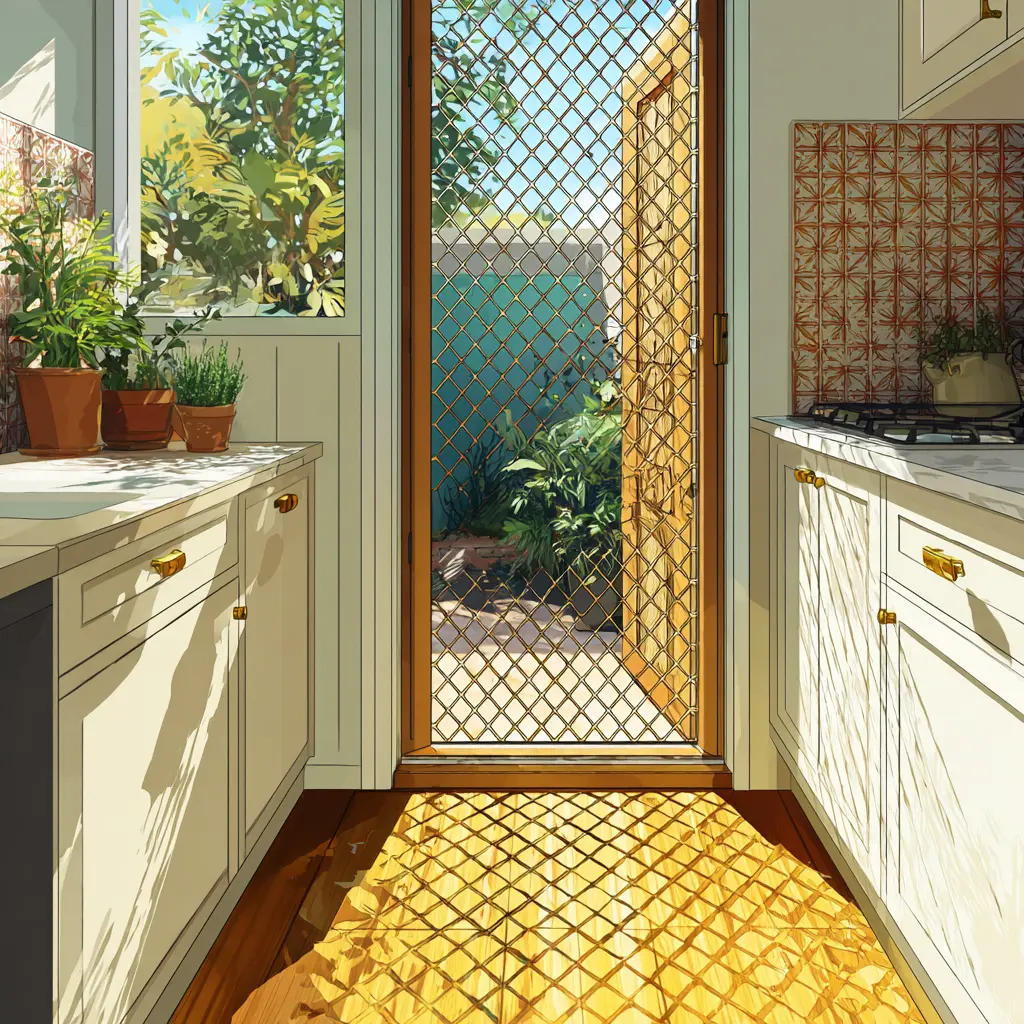
External doors are common property - mostly
Most owners assume that the front door of their unit is theirs to deal with. In a strata-titled or community strata-titled group, that's not quite right- the door itself is common property, and the corporation has a maintenance obligation. Where the boundary actually lies, and what that means for repairs, locks, screen doors, and the very real safety issues with older fire doors, is what this article walks through.
Who owns the door?
In most Australian jurisdictions a lot's boundary runs at the inner surface of the wall, and a wall by definition includes the doors and windows set into it. So an external door is common property, and the corporation carries the maintenance obligation, while the owner keeps the inside face and everything within the lot. Where lots are freestanding rather than stacked, every door in the building usually belongs to the lot owner.
The duty, by jurisdiction
NSW. Strata Schemes Management Act 2015, s 106(1). Section 107's common property memorandum deals expressly with doors, locks and hardware, so a scheme that adopted it may have moved some of this to owners.
VIC. Owners Corporations Act 2006, s 46, with s 24 limiting an owners corporation's ability to unreasonably refuse consent to a change in external appearance.
QLD. Body Corporate and Community Management Act 1997, s 152, with the duty in your regulation module: Standard Module s 180, Accommodation Module s 170, Commercial Module s 127, Small Schemes Module s 99.
WA. Strata Titles Act 1985, s 91(1)(c).
SA. Strata Titles Act 1988, s 5 puts the boundary at the inner surface of the wall and s 25 imposes the duty. Under the Community Titles Act 1996, external doors are common property under ss 19 and 28 with the obligation in s 75.
TAS. Strata Titles Act 1998, Schedule 1 clause 8.
ACT. Unit Titles (Management) Act 2011, s 24(1).
NT. Unit Titles Act 1975, s 34(b).
What this means in practice:
The door itself, the door frame, the hinges, and the weatherboards belong to the corporation.
The inside surface of the door (the paint, varnish, or finish facing into the unit) is the owner's to maintain.
Internal doors (between rooms inside the unit) are entirely the owner's responsibility.
For the underlying boundary rules in detail, see Unit Titles Explained.
External door types
Most external doors fall into one of these categories:
Solid timber doors- the gold standard for an external door. Weather well, durable and repairable.
Solid core doors- engineered timber doors with a dense internal core. Suitable for external use when properly sealed.
Hollow core doors- an internal-only product. Should never be used externally, but unfortunately often are.
Hardboard-faced hollow core doors- even worse for external use. Hardboard absorbs water and delaminates within a few years of weather exposure.
Common problems
Varnish deterioration
Exterior varnish breaks down under sun and rain. Once the gloss starts going dull and the timber underneath begins to grey, it's time to act, before the bare timber starts to absorb water and rot.
Hollow core doors used externally
If your group has any hollow core doors fitted as front entry doors, they need to be replaced not refinished. The veneer peels, the inside delaminates and no amount of paint will fix the underlying problem. Replace with a solid core or solid timber door rated for external use.
Hardboard peeling
Same story. Hardboard-faced hollow core doors used externally are a misuse of the product and the only fix is replacement.
Drafts and energy loss
Gaps around the bottom and sides of an external door let in cold air in winter, hot air in summer and dust and insects year-round. Cheap weather seals and stripping fitted to the bottom of the door make a noticeable difference and are easy to install.
Best practice for refinishing
For a varnished external door:
Sand thoroughly to remove all loose varnish and grey timber
Dust down completely
Apply two coats of an exterior-grade polyurethane clear gloss
For a painted door, the principles are the same: prepare the surface properly, prime any bare timber and finish with a paint rated for exterior use. Don't skip the preparation - it's the part that determines how long the finish will last.
Screen doors and security doors
Screen doors and lockable security doors are generally treated as the respective owner's responsibility to maintain. However, because installing one usually means drilling into the door frame (which is common property), the owner needs the corporation's approval before installing one. Get the approval in writing through a meeting resolution before the work starts.
Some groups standardise the colour or style of screen doors as part of their by-laws, so it's worth checking yours before approving an installation.
Fire doors and the asbestos issue
Fire doors are designed to slow the spread of a fire from one part of a building to another, giving residents more time to evacuate and firefighters more time to respond. They're common in apartment buildings and in any property with shared corridors or stairwells.
Fire doors installed before 1990 should be assumed to contain asbestos in their fire-retardant core. This applies to any work that disturbs the door, even something as routine as replacing a lock or rehanging the door, which means it must be done by a tradesperson licensed to work with asbestos.
How to test for asbestos in a fire door
A licensed tradesperson can take a sample for laboratory testing in two relatively low-disturbance ways:
Temporarily remove a couple of the door-hinge screws and check the threads. There's often enough core material on the screws to recover a viable sample.
Inspect the top or bottom edge of the door, where the core is sometimes exposed from when the door was originally trimmed to fit.
If the result is positive, the corporation should:
Attach a clear warning label to every asbestos fire door
Add the doors to the corporation's Asbestos Register
Brief any future contractor (locksmith, painter, builder) before they touch the door
For more on the corporation's wider asbestos obligations, see our guide to asbestos management.
Door lock types
The level of security a lock offers depends on its construction. Any lock with only a key in the knob or handle is only marginally secure and unfortunately a determined burglar can defeat it quickly. For meaningful security, fit a deadbolt with at least a one-inch throw, made of case-hardened steel, in addition to the knob lock.
Mortise locksets
Used on most external entry doors. The lock body is large and rectangular and slides into a mortise which is a cavity carved into the edge of the door specifically to receive the mechanism. A mortise lockset combines knob, latch, and deadbolt into a single integrated unit. Installation is fiddly carpentry best done by a professional.
Cylinder locksets
The body is rounded and fits into intersecting holes bored through the door. The deadbolt slides into a corresponding sleeve in the doorjamb. It is easier to install than a mortise lockset and very common on modern external doors.
Rim locks (surface deadbolts)
Mounted on the inside surface of the door, with the bolt sliding into a sleeve attached to the inside frame. It operates independently of the door knob, so a rim lock can be added to an existing door for extra security without replacing the original hardware.
Double-cylinder deadbolts
Require a key on both sides of the door. These are the safest choice for doors with adjacent windows or glass panels. A thief can't break the glass and reach in to unlock it from the inside.
One important caveat: a double-cylinder deadbolt is also a fire hazard, because no key means no exit in an emergency. If you fit one, keep a key on a hook within reach of the door at all times, and make sure every resident knows where it is. Some jurisdictions restrict their use in residential settings, so check your local building rules before installing.
Who maintains the lock?
Door furniture (locks, handles, latches) has historically been treated as the respective owner's responsibility to maintain and replace. But the corporation should have a clear written policy on door lock maintenance, replacement standards, and who pays for what so there's no argument when a lock fails. A simple resolution at a general meeting is enough to put one in place.
Get in touch
If your group has questions about external door responsibilities, fire door safety or simply need help working out a sensible policy on door locks and security, we're happy to help.
Call us on 1300 79 2255 or email hello@acaciacollective.com.au.
Related Articles


Have questions about strata?
Get in touch and we'll help with your strata needs.