
Driveways - Common Problems and Who Owns Them
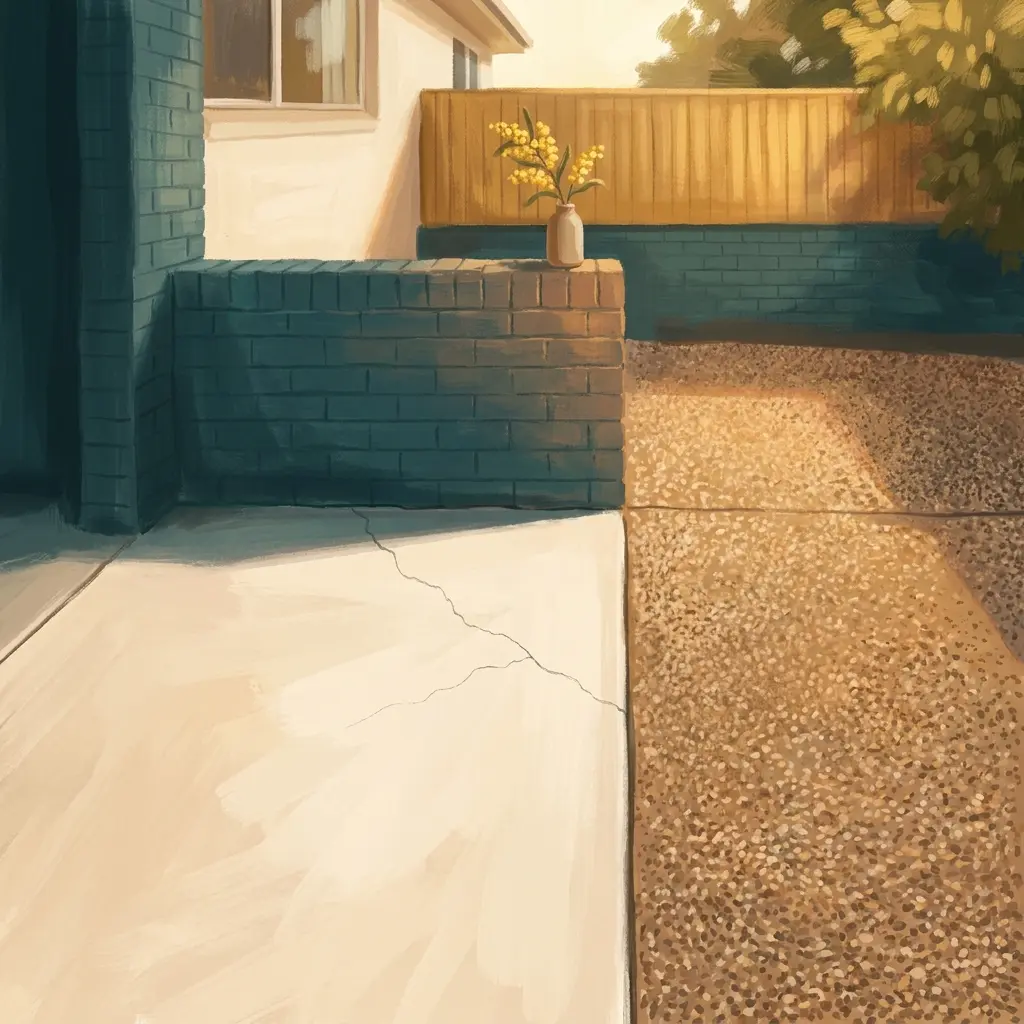
Who owns the driveway?
The shared driveway in a strata or community group is common property. Every owner has the right to use it and the corporation pays to maintain it.
If a driveway is the exclusive entrance to one unit and is wholly within that unit's exclusive-use area, the answer can flip, but the default assumption is common property and the by-laws or plan will tell you if your group is the exception.
The maintenance duty, by jurisdiction
A driveway sits outside the boundary of any single lot and serves more than one, which makes it common property, and the corporation carries the statutory duty to maintain it. A driveway entirely within one lot is that owner's. The principle holds across Australia; the section that imposes the duty does not.
NSW. Strata Schemes Management Act 2015, s 106(1): the owners corporation must properly maintain the common property and keep it in a state of good and serviceable repair. A common property memorandum under s 107 can shift responsibility for specified items onto an owner.
VIC. Owners Corporations Act 2006, s 46. Lot owners must not repair or alter common property themselves (s 47A).
QLD. Body Corporate and Community Management Act 1997, s 152, with the operative duty in your regulation module: Standard Module s 180, Accommodation Module s 170, Commercial Module s 127, Small Schemes Module s 99.
WA. Strata Titles Act 1985, s 91(1)(c), which expressly covers deterioration from fair wear and tear, inherent defect or any other cause.
SA. Strata Titles Act 1988, s 5 puts everything outside unit boundaries in common property and s 25 imposes the duty. Community Titles Act 1996, ss 28 and 75 for community corporations.
TAS. Strata Titles Act 1998, Schedule 1 clause 8.
ACT. Unit Titles (Management) Act 2011, s 24(1).
NT. Unit Titles Act 1975, s 34(b).
Four common driveway surfaces
Plain concrete
Concrete is the most common driveway surface in Australian unit groups. It is long-lasting, cheap to maintain and easy to patch. Common faults include hairline shrinkage cracks (these are cosmetic and can be left alone), wider cracks from soil movement (monitor these - see Foundations article), and lifted slabs at expansion joints (these are a trip hazard so address this promptly).
Exposed aggregate
Exposed aggregate has a decorative finish where the top layer of concrete is washed off to reveal the stones beneath. It has higher kerb appeal but the same maintenance issues as plain concrete, plus the surface texture traps dirt and moss. An annual high-pressure clean can keep it looking good.
Brick pavers
Brick pavers are common in 1980s-90s unit groups. They are attractive when level, but can look miserable when they're not. Pavers settle into wheel ruts, edges sink and weeds grow through the joints. The fix here is to lift, re-level the sand bedding, and re-lay them, which is labour-intensive but doable in sections. Polymeric jointing sand keeps weeds out for years longer than washed sand.
Asphalt
Asphalt is rare on modest unit-group driveways but common on larger sites with longer access roads. It is cheap to lay, smooth to drive on, but with a finite life as UV breaks down the binder and the surface dries out and ravels. Sealing asphalt every 5–7 years roughly doubles the life of the surface.
Common driveway problems
Cracks
Hairline cracks (less than 1mm) in concrete are usually shrinkage from the original pour and can be left alone. Cracks wider than 3mm or that step over time are foundation movement, so investigate the underlying cause (it could be a drainage issue, tree roots or soil) before patching. See Maintaining Foundations and Paths.
Trip hazards
Lifted slabs, sunken pavers and eroded edges are all trip hazards. These are public liability exposures as anyone tripping on a common-property driveway can claim against the corporation. Be sure to document any complaints and don't let known hazards sit. Quick fixes include grinding down a concrete lip, re-bedding a single paver or packing a sunken edge with cold-mix asphalt.
Weeds
Weeds are very good at finding gaps in pavers and cracked concrete. Manual removal of weeds works but is endless. A glyphosate-based weed killer is the standard chemical option, applied in spring before flowering. For groups that prefer non-chemical, a steam weeder or boiling water is effective on hard surfaces and avoids residue.
Oil stains
Fresh oil stains from parked cars can be removed with cat litter or sawdust and a degreaser. Old stains penetrate concrete deeply and can rarely be fully cleaned. Pressure washing helps but the colour change usually persists. So, addressing the leaky vehicle is the only real fix.
Inspection rhythm
Quarterly walkover: scan for new cracks, lifted slabs, settling pavers and trip hazards.
Annual high-pressure clean: remove moss, mould and oil stains. This is best done in late winter so the surface dries before summer use.
Re-seal every 5–7 years (asphalt) to extend life.
Lift and re-level any settled sections every 10–15 years (pavers).
Replacement
A well-maintained concrete driveway lasts 40+ years. When the time comes, replacement options include re-pouring concrete (this is the most durable option), overlaying with stencilled or stamped concrete (it is decorative but has half the life of new concrete), or removal / replacement of pavers (this has better kerb appeal but comes with an ongoing maintenance overhead). Get at least three quotes and don't skimp on the base, the underlying preparation determines how long the new surface lasts.
Get in touch
If your driveway is showing its age and you're weighing up repair versus replacement, we're happy to walk the surface with you and help scope the work. Acacia Collective manages strata and community title groups across South Australia.
Call us on 1300 79 2255 or email hello@acaciacollective.com.au.
Related Articles


Have questions about strata?
Get in touch and we'll help with your strata needs.