
Foundations, Paths and Slabs
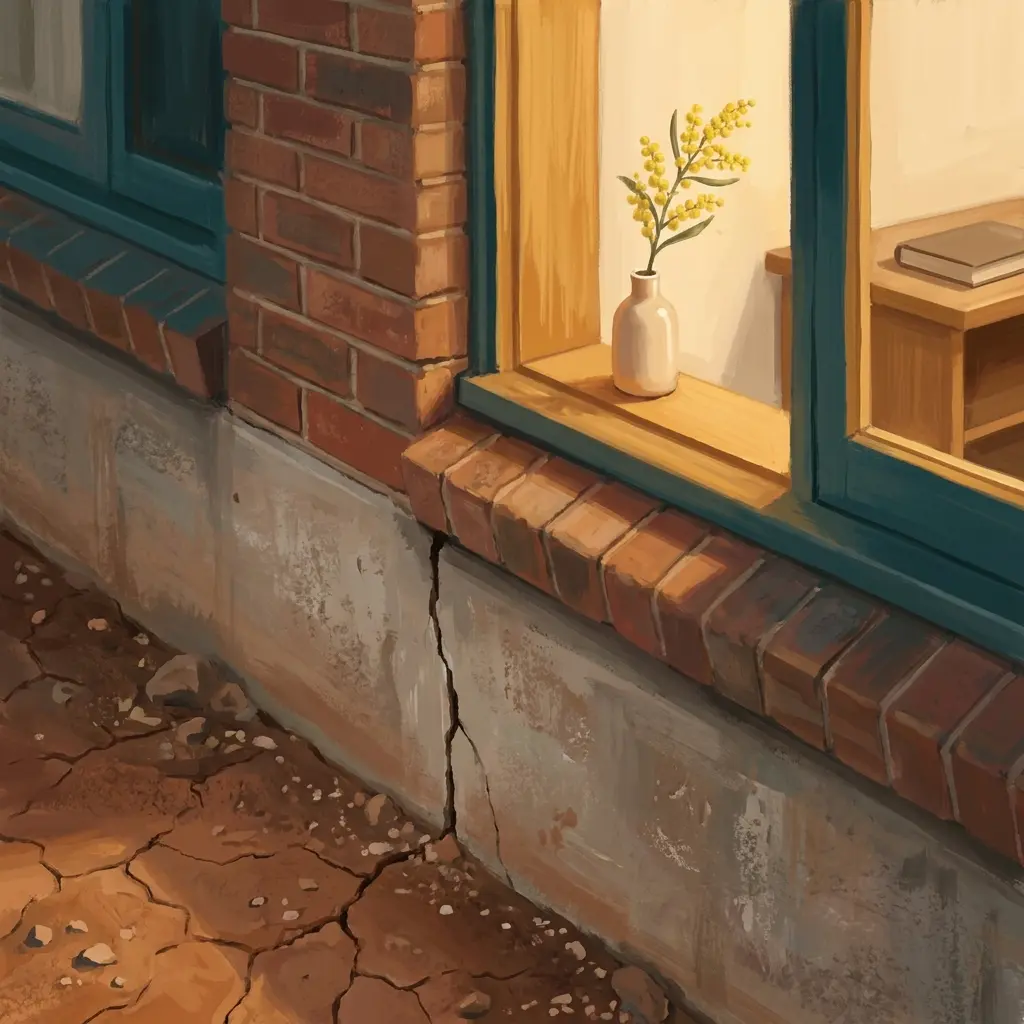
Who owns the foundations?
Foundations and the slab they support are structural elements of a building. They are common property (with very rare exceptions) owned and maintained by the corporation, regardless of which unit sits on top.
The same usually applies to paths and external concrete around the buildings, although this depends on whether the path crosses common property or sits inside an exclusive-use area.
Where the boundary sits, by jurisdiction
In most Australian jurisdictions the lot boundary runs at the inner surface of the floor slab, which puts the slab itself, the footings, the piers and the ground beneath them in common property. Paths are common property when they sit on common property, and a by-law or memorandum can move that. Where lots are freestanding rather than stacked, the foundations of a building inside a lot usually belong to the lot owner.
NSW. Strata Schemes Management Act 2015, s 106(1) for the duty; structural cubic space is dealt with in the Strata Schemes Development Act 2015. A s 107 common property memorandum can shift responsibility for specified items.
VIC. Owners Corporations Act 2006, s 46. Lot owners must not repair or alter common property themselves (s 47A).
QLD. Body Corporate and Community Management Act 1997, s 152, with the duty in your regulation module: Standard Module s 180, Accommodation Module s 170, Commercial Module s 127, Small Schemes Module s 99.
WA. Strata Titles Act 1985, s 91(1)(c), which expressly covers deterioration from inherent defect as well as fair wear and tear. That matters for foundations more than for anything else in this list.
SA. Strata Titles Act 1988, s 5 puts the boundary at the inner surface of the floor slab, and s 25 imposes the duty. Under the Community Titles Act 1996 the boundary comes from the deposited plan: in a strata division the slab and footings are common property under ss 28 and 75, and in a lot-beside-lot division the foundations of a building within a lot are the lot owner's.
TAS. Strata Titles Act 1998, Schedule 1 clause 8.
ACT. Unit Titles (Management) Act 2011, s 24(1).
NT. Unit Titles Act 1975, s 34(b).
Foundations are the one area where it is worth reading your own plan rather than assuming. The cost of getting it wrong is measured in tens of thousands.
Footing types
Concrete strip footing
Concrete strip footing is most common in older buildings. It is a continuous concrete strip that runs under each load-bearing wall. Although cheap to build, it is unsuited to South Australia's reactive clay soils as strip footings often fail to handle the seasonal soil movement, which is why so many older units in Adelaide's clay belt show diagonal cracks above doorways.
Stiffened raft slab
The most common modern footing for unit groups is stiffened raft slab. It is a reinforced concrete slab with downward-projecting beams under load points; the whole thing acts as a single rigid platform that rides over soil movement. When properly designed and drained, a raft slab handles reactive clay well.
Bored piers
Bored concrete piers are drilled deep into stable soil, with bearers spanning between them. They're most commonly used on poor or unstable sites such as coastal sand, made ground and sloping blocks. They're expensive to install but extremely stable once in.
What causes foundation movement?
South Australia's reactive clays, particularly across the Adelaide Plains and the eastern suburbs toward the Hills, swell when wet and shrink when dry. The seasonal movement is enough to crack masonry, jam doors and pull tiles off walls. The three biggest contributors to foundation trouble are:
Plumbing leaks under or near the slab. Most Australian soils are clay-heavy and clay swells when it gets wet and shrinks when it dries out. A slow leak creates a wet patch that behaves differently to the soil around it, and the slab ends up sitting on ground that's moving unevenly.
Trees too close to the building. Trees are thirsty, especially in summer. A big gum or fig within a few metres of the slab will pull moisture out of the soil on that side of the building, causing the ground to shrink and the slab to drop slightly where the tree is.
Poor surface drainage. Water pooling against the slab edge, blocked agricultural (aggie or ag) drains or downpipes emptying onto garden beds instead of into stormwater all push extra moisture into the soil right next to the building. Over time that soft, wet ground can't support the slab the way it should.
Early signs of a foundation problem
Diagonal cracks above door and window openings which usually start at the corner of the opening and run upward at 30–45 degrees.
Doors that suddenly start sticking after years of working fine, particularly if multiple doors on the same side of the building start binding around the same time.
Tiles cracking in a line across a kitchen or bathroom floor.
A horizontal crack in the brickwork running along a course of mortar is usually a sign that one section of the building is moving differently to another.
Gaps appearing between cornices and ceilings or skirting boards lifting away from walls.
Hairline cracks in plaster are often cosmetic. Cracks wider than a 5-cent coin, cracks that step across multiple courses of brickwork or cracks that are still growing month-on-month all warrant a structural engineer's opinion.
What to do if you suspect a problem
Check for plumbing leaks first. A leaking pipe under or near the slab is the most common cause of localised movement and the easiest to fix.
Photograph and date the cracks. A simple set of measurements (a ruler held against the crack in a monthly photo) tells you whether it's active or stable.
Get a structural engineer to inspect if the cracks are growing or wider than 3–4mm. A report costs in the low four figures and tells you whether the problem is cosmetic, can be monitored, or needs underpinning (extending or strengthening the foundations to stop further movement).
Notify the insurer if the trigger looks like a one-off event (a burst water main, a tree blown down in a storm). See our article on Insurance Claims.
Underpinning
Where settlement is severe, underpinning extends the foundations down to stable soil, usually with concrete piers driven beneath the existing footing. It's expensive (tens of thousands of dollars per affected wall) but it's the only durable fix when reactive clay has caused real movement.
Always get at least three quotes. Specifications vary widely between contractors, and the cheapest is rarely the right answer for a load-bearing structural repair. See our article on Working with Contractors for tendering guidance.
Paths and external concrete
Paths crack and lift for the same reasons foundations do, due to reactive clay, tree roots and water. Most cracking in paths is cosmetic and can be left alone. Lifted slabs that create a trip hazard need attention either by grinding down the lip or by lifting and re-laying. Trip hazards are a public liability issue; document any reported and don't let them sit to worsen.
Get in touch
Foundation issues are stressful and expensive, but the worst of them are usually preventable with good drainage, prompt attention to plumbing leaks and an eye on what's growing near the building. If you're seeing cracks and want a second opinion before commissioning an engineer, we're happy to take a look. Acacia Collective manages strata and community title groups across South Australia.
Call us on 1300 79 2255 or email hello@acaciacollective.com.au.
Related Articles



Have questions about strata?
Get in touch and we'll help with your strata needs.