
Lighting - External and Internal, Who Owns Which?
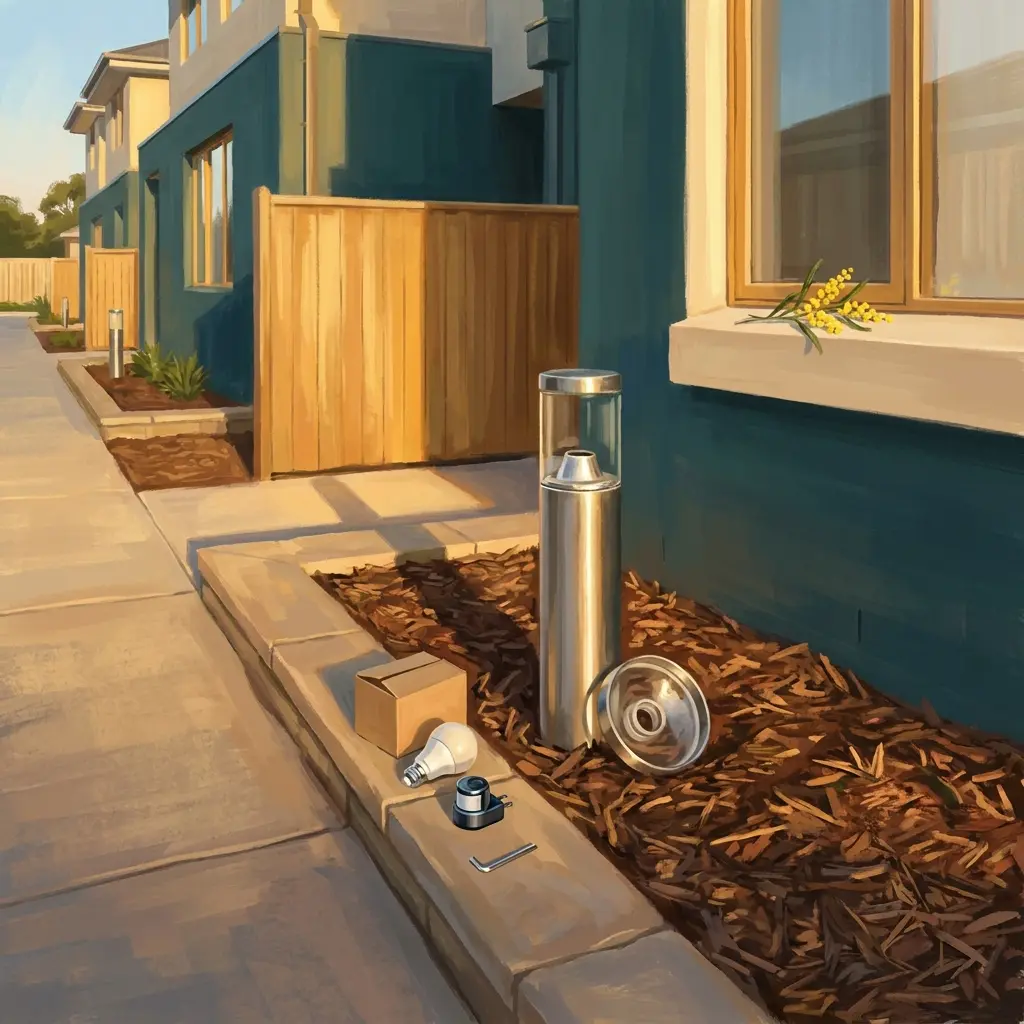
Who owns the lights?
External and shared-area lighting is common property. Hallway lights, stairwell lights, carpark lights, garden lights on common ground and the lights illuminating shared paths all belong to the corporation. Lights inside a unit, including a porch light wired through the unit's meter, are the owner's.
The split usually mirrors the electricity supply: if the light runs off the common-property meter, it's the corporation's.
The maintenance duty, by jurisdiction
Shared lighting circuits are service infrastructure that does not serve a single lot exclusively, which puts them in common property, and the body that owns the common property carries a statutory duty to keep them working. That holds across Australia. What changes is the name of the body and the section that imposes the duty.
NSW. Strata Schemes Management Act 2015, s 106(1): the owners corporation must properly maintain the common property and keep it in a state of good and serviceable repair, and must renew or replace fixtures and fittings (s 106(2)). A common property memorandum under s 107 can shift responsibility for specified items onto an owner.
VIC. Owners Corporations Act 2006, s 46 for common property generally and s 47 for services. Lot owners must not repair or alter common property themselves (s 47A).
QLD. Body Corporate and Community Management Act 1997, s 152, with the operative duty in whichever regulation module applies to your scheme: Standard Module s 180, Accommodation Module s 170, Commercial Module s 127, Small Schemes Module s 99. Establish your module before quoting a section.
WA. Strata Titles Act 1985, s 91(1)(c): the strata company must keep the common property in good and serviceable repair, properly maintain it, and renew or replace it if necessary.
SA. Strata Titles Act 1988, s 5(6) puts wires, cables and electrical infrastructure not serving a single unit in common property, and s 25 imposes the duty. Community Titles Act 1996, ss 3 and 28 for service infrastructure, s 75 for the duty.
TAS. Strata Titles Act 1998, Schedule 1 clause 8: the body corporate must maintain the service infrastructure in good and serviceable order.
ACT. Unit Titles (Management) Act 2011, s 24(1): the owners corporation must maintain the common property.
NT. Unit Titles Act 1975, s 34(b): the corporation must keep in good repair and properly maintain the common property.
Why lighting matters
External lighting is one of the cheapest safety investments that a corporation can make. Three things that installing external lighting does:
Reduces trip-and-fall claims. Steps, kerbs and uneven paths are the most common causes of public liability claims; having well-lit walkways can prevent most of them.
Deters opportunistic crime. Insurance Council research consistently shows that well-lit common areas reduce theft from vehicles, vandalism and unauthorised entry.
Helps emergency response. If an ambulance or fire crew is called at night, the lights need to work and the building number needs to be visible.
Three common fitting types
Bulkhead fittings
Bulkheads are the standard "round dome" fitting on hallway and stairwell ceilings. They're robust, cheap and easy to replace. Most modern bulkheads now ship with integrated LED modules, a step up from the old screw-in compact fluorescents that took 30 seconds to reach full brightness.
Bollard and path lights
These are knee-height fittings along paths and around gardens. The weak point for bollard and path lighting is usually water ingress at the base where the cable enters; once the gland fails, the cable corrodes and the light fails. UV also breaks down plastic diffusers over 8–12 years, leaving a yellowed and brittle fitting.
Floodlights
Floodlights are used for carparks, building exteriors and security applications. Modern LED floodlights deliver more light per watt than the old halogen units and run cooler, which is important because halogen floodlights have caused fires in groups where the housing was installed too close to combustible cladding. Replacing halogen with LED is a worthwhile insurance and safety upgrade.
The case for LEDs
If your group still has fluorescent or halogen common-area lighting, replacement with LEDs is one of the highest-return maintenance investments available. Three reasons:
Power use drops 60–80%. A typical 70W twin-tube fluorescent fitting replaces with a 25W LED panel.
Lamp life is 5–10× longer. That means fewer call-outs to replace bulbs in stairwells and far fewer ladder visits to floodlights.
Light quality is better. Modern LEDs hit instant full brightness, there is no warm-up and the colour-render is closer to daylight, which matters in stairwells where step edges need to be visible.
Payback periods on LED retrofit programs are typically 2–4 years on the energy savings alone, before counting the reduced labour cost of fewer replacements.
Sensors and timers
The cheapest energy savings come from not lighting empty spaces. Two control options:
Photoelectric (daylight) sensors turn lights on at dusk and off at dawn. These are standard for external area lighting; and there is almost no reason not to fit one.
Movement sensors turn lights on when someone enters and they turn off after a delay (typically 2–5 minutes). These are best for stairwells, corridors and rarely-used carparks. Pair movement sensored lights with a low-level "permanent on" base brightness so the space is never fully dark.
Combining photoelectric sensors with movement sensors typically cuts running cost by another 50% on top of the LED saving.
Vandal-resistant fittings
For groups that have had repeated vandalism (such as broken diffusers and smashed bulbs), vandal-resistant fittings with polycarbonate diffusers and tamper-resistant fixings are widely available. The unit cost is roughly double a standard fitting, but the call-out savings pay back quickly in any group with a real vandalism issue.
Inspection rhythm
Do a monthly walkover at dusk: this identifies any failed lamps before residents complain. A responsible officer or the property manager can do it in 10 minutes for most groups.
Complete an annual electrical inspection: call out a licensed electrician to test RCDs (residual current devices, the safety switches in the switchboard), check emergency lighting (where fitted) and inspect external fittings for water ingress.
Review the lighting plan against current standards every 5 years: LED prices keep falling and sensor technology keeps improving.
Get in touch
If your group is weighing an LED upgrade or rethinking how the common areas are lit, we can help you scope the project and get apples-to-apples quotes from licensed electricians. Acacia Collective manages strata and community title groups across South Australia.
Call us on 1300 79 2255 or email hello@acaciacollective.com.au.
Related Articles


Have questions about strata?
Get in touch and we'll help with your strata needs.