
Painting Common Property in Strata and Community Groups
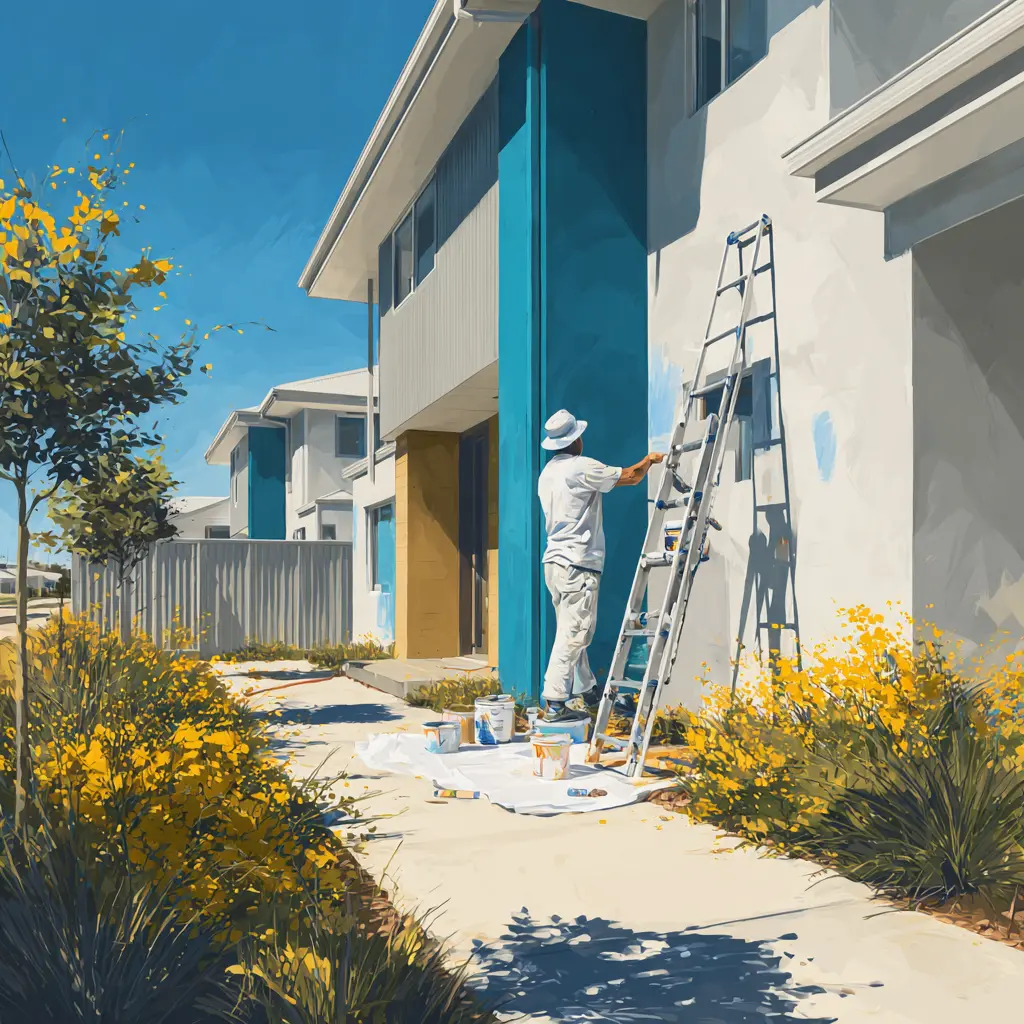
Getting a repaint right
Painting is one of the bigger maintenance projects a body corporate will tackle, and getting the process right makes a real difference to the outcome and the budget. This guide walks through the key steps from specification to final inspection.
Who's responsible?
Where lots are stacked or share a building, the exterior surfaces are common property and the corporation repaints them. Where lots are freestanding and sit side by side, the building usually sits inside the lot and the owner repaints it. The physical arrangement decides it, not the label on your title.
The duty to maintain common property, which repainting falls under, sits here in each jurisdiction:
NSW. Strata Schemes Management Act 2015, s 106(1). Painting the common property is also an express purpose of the capital works fund.
VIC. Owners Corporations Act 2006, s 46. Note s 24 of that Act: an owners corporation must not unreasonably refuse consent to an owner altering an external appearance, so check your rules before repainting a lot.
QLD. Body Corporate and Community Management Act 1997, s 152, with the operative duty in your regulation module: Standard Module s 180, Accommodation Module s 170, Commercial Module s 127, Small Schemes Module s 99.
WA. Strata Titles Act 1985, s 91(1)(c).
SA. Strata Titles Act 1988, s 25(a) for strata corporations. Community Titles Act 1996, s 75(1)(b) for community corporations.
TAS. Strata Titles Act 1998, Schedule 1 clause 8.
ACT. Unit Titles (Management) Act 2011, s 24(1). Worth knowing: the ACT maintenance duty carries an express note that it does not extend to painting unless the painting is part of maintaining the substrate, so get advice before assuming a repaint is covered.
NT. Unit Titles Act 1975, s 34(b).
Check your corporation plan for notes about where the unit or lot boundary ends. In most cases, the boundary stops just below the eaves. This means the eaves, fascia and gutters are common property and the corporation's responsibility to maintain and repaint.
The process: step by step
Get a paint specification: Major paint brands like Dulux and Wattyl will often provide a specification at no cost, simply contact your local representative or paint shop. The spec sets out what preparation is needed and which products suit your building.
Get the group's agreement: The Management Committee or a general meeting needs to approve the specification, the schedule of works and the colour scheme before anything else happens.
Consider appointing a supervisor: For larger groups or more complex jobs, engaging a qualified person to oversee the work is worth the cost. They'll make sure the specification is followed and the finish is up to standard.
Get quotes: Approach a minimum of 3 qualified, licensed and insured painters. Give each of them the same information: the approved paint specification, the schedule of works, a plan of the group and photos if available. Consistent briefs make it easier to compare quotes fairly.
Select a contractor: Bring the quotes back to the Management Committee or a general meeting for a decision on which to accept and how the work will be funded.
Notify unsuccessful contractors: A quick call or email is professional and keeps the door open for future work.
Confirm with the successful contractor. Start with a phone call, then confirm everything in writing; scope, start date, payment terms and any specific site requirements.
Set the start date. If funds are available, lock in a date. If levies are still being collected, check whether the contractor can start early to fill a gap in their schedule. Otherwise set the date for after funds are expected to be in hand.
Brief the supervisor: (if appointed) with the contractor's details and start date.
Notify all residents: in writing at least a week before work begins. The contractor will need access to external windows and doors from time to time.
Monitor the work: Make sure the paint specification is being followed - correct preparation, correct products, correct number of coats.
Manage payments carefully: Only make progress payments once the committee and/or supervisor are satisfied with the work completed to that point.
Do a final walkthrough: Walk the entire site on completion. Look for missed spots, uneven coverage and paint splatter on surfaces that shouldn't have been painted. Get any defects rectified before making the final payment.
Tips
Avoid painting in very cold, wet or extremely hot weather. Paint needs the right conditions to cure properly.
After the repaint, set up a sinking fund that accumulates enough over the paint's expected lifespan to cover the next round. This avoids the need for a large special levy when the time comes.
Example general meeting resolution
The following wording can be adapted for your group's meeting:
The Management Committee is to obtain a painting specification and schedule of works, and then seek quotations. The Management Committee is authorised to accept a suitable quotation. The work is to be funded from the Sinking/Reserve Fund. If the Fund is insufficient, the Management Committee is authorised to raise a special levy.
Levy options
Equal levy (per unit):
The levy is to be charged equally to those persons registered as proprietors at the time the decision to proceed is made.
(Note: If your group currently charges levies by unit/lot entitlement, switching to equal levies requires a unanimous resolution.)
Proportional levy (by unit/lot entitlement):
The levy is to be charged in accordance with unit / lot entitlement to those persons registered as proprietors at the time the decision to proceed is made.
Important Notes
Community corporations can only raise funds at general meetings. The committee can't unilaterally impose a levy.
In non-strata community titles (lot-by-lot), each owner is responsible for all maintenance on their own buildings. The corporation's painting obligation only applies to common property.
Get in touch
If you want more information on how to manage a repaint of your strata property, contact us for advice. Call us on 1300 79 2255 or email hello@acaciacollective.com.au.
Related Articles


Have questions about strata?
Get in touch and we'll help with your strata needs.